
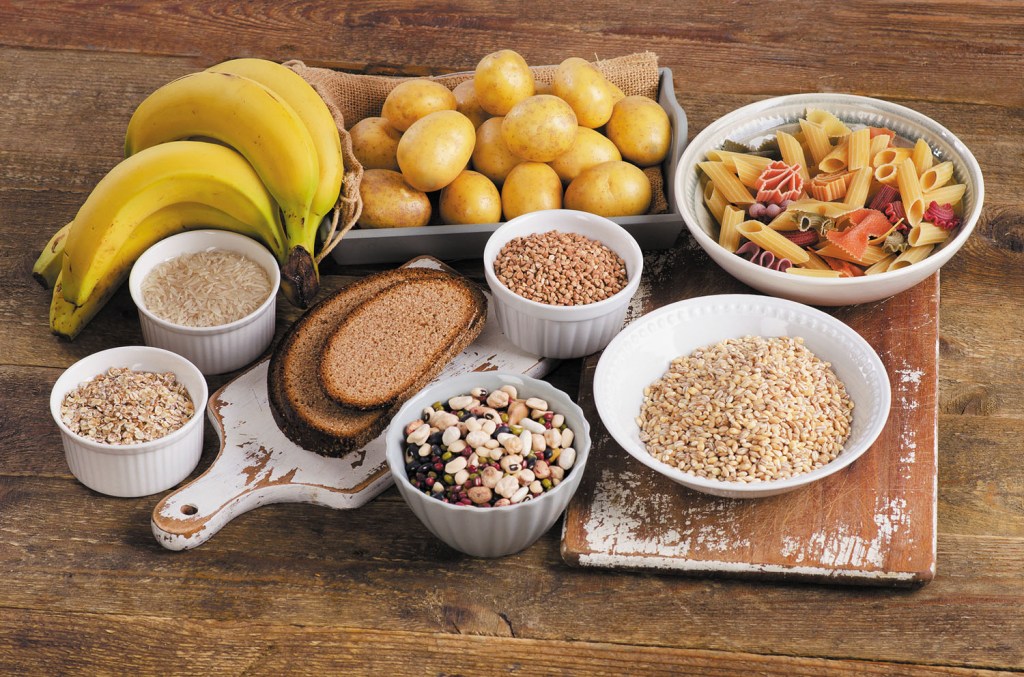
Compounds with empirical formula Cn(H2O)n are classified as carbohydrate. Carbohydrate is a biological macromolecule which functions involves energy storage, structural components and cellular recognition. Produced during photosynthesis through carbon dioxide fixation, it is also referred as hydrates of carbon because of the 1:2 ratio of hydrogen and oxygen atom respectively as they are in water. Monosaccharide, disaccharide and polysaccharide are the three major types of carbohydrate. Monosaccharides is the basic unit of carbohydrate followed by disaccharides with two to ten monosaccharide units whilst polysaccharide is the polymer of carbohydrates.
The hydrolysis of monosaccharides into smaller unit cannot be undergo under mild condition because it is the simplest form of carbohydrate. Monosaccharides compounds are classified based on the number of carbons. For instance, compound of C3(H2O)3 has three carbon atoms which classified as triose. Monosaccharides with aldehyde or ketone group are classified into aldoses and ketoses respectively. Aldoses with more than 2 carbon atoms and ketoses with more than three carbon atoms possess chiral carbon therefore have stereoisomer. The functional group of cyclized monosaccharides form hemiacetal with C-O-C bridge whilst the uncyclized form act as reducing agent. The derivatives of monosaccharides include sugar phosphate, deoxy acids, amino sugars and sugar alcohol.
Disaccharides is glycosides that form between two monosaccharides through glycosidic bond. Glycosidic bond is identified by the linkage from the anomeric carbon of a monosaccharide compound to the -OR group of another monosaccharide compound. For instance, both monosaccharides unit of maltose consist of D-glucose monomers in α(1→4) linkage and occasional branch points with a α(1→6) linkage. Maltose, cellobiose, sucrose and lactose are some example of disaccharides.
Polysaccharide is further classified into homopolysaccharide and heteropolysaccharide. Homopolysaccharide has only one type of monomer whilst heteropolysaccharide possess many types of monomers. Polysaccharides have three key functions which are energy storage, structural components and cellular recognition.
The energy stored in plant and animal that are termed as starch and glycogen respectively are polysaccharides compounds. Starch is further classified into amylose and amylopectin based on their chemical structure. Generally, amylose is a linear polymer of α(1→4) linked glucose residue whilst amylopectin is a branched polymer of α(1→4) linked glucose residue with a α(1→6) linked branch. Glycogen has quite similar configuration as amylopectin where the only difference is branches of glycogen are formed every 8-12 glucose whilst branches of amylopectin are formed every 24-30 glucose. Storage carbohydrate highlighting starch are the major energy source for human diet.
Some polysaccharides function as structural component which is chitin, cellulose and glucoaminoglycans. Classified as homopolymer, chitin is the main component of cell wall of fungi and exoskeletons of arthropods. Cellulose is a homopolymer which function as primary component of plant cell wall and green algae. Lastly, glucoaminoglycan is a long, unbranched polysaccharides made of repeating disaccharides units. Unlike storage carbohydrate, cell wall polysaccharide in plant is not digested. However, it is a major component of dietary fibre that is important in normalising bowel movement.
Glycoprotein is a polysaccharide compound and an important integral membrane protein with vital role in cell-cell interaction. Generally, glycoprotein is further classified into two types, O- linked glycoprotein and N- linked glycoprotein based on their chemical structure. Besides cell-cell interaction, glycoprotein is important in embryonic development, cell adhesion, immune function and pathogenic configuration.
In summary, the three major types of carbohydrates are monosaccharides, disaccharides and polysaccharides. Carbohydrate has important function in daily life such as storage carbohydrates are the major energy source for human diet, cell wall polysaccharides are vital as dietary fibre and lastly, informational carbohydrate function in cellular recognition and maintain body’s health.
 E U N E I R O P H R E N I A